
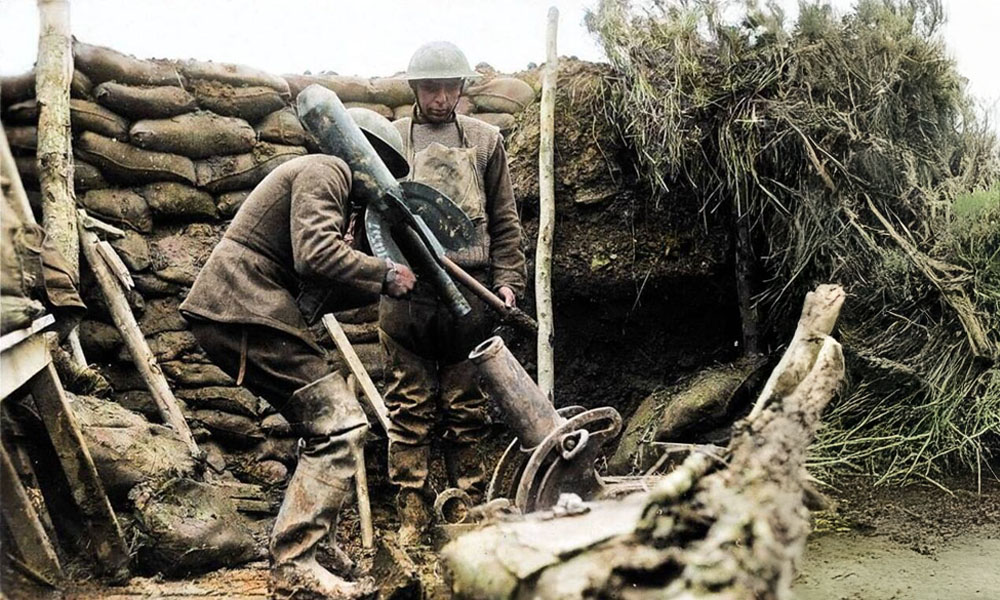

World War I began on July 28, 1914, and what started as a belated act of retaliation for the murder of two obscure royals quickly engulfed Europe in a catastrophic clash of entangling alliances that brought down monarchies, obliterated empires, and changed the world. Over 60 million servicemen from 36 countries manned the hellish trenches that stretched from north to south along two fronts. New, advanced weapons produced on an industrial scale left millions of soldiers and civilians dead by the time the war ended in 1918.
World War I challenged generals and their staffs to adjust their strategic thinking to the stark reality that confronted them. The evolution was slow and painful, turning what the German General Staff was confident would be a six-week war into a four-year nightmare. The Allies and Central Powers, each comprised of rivals with competing national interests, had to learn to work and fight as coalitions. For the Americans who entered the war in 1917, the challenge was to quickly build, train, deploy, and supply an army on another continent.
This historic event offers a wealth of case studies that explore the challenges of strategic level leadership in a challenging environment. These case studies reinforce the need to build cohesive teams, lead with vision, maintain clear communication, innovate under pressure, and meet objectives with limited resources—leadership lessons that are as relevant to today’s corporate leaders as they were to the generals who commanded armies along the Eastern and Western Fronts.