
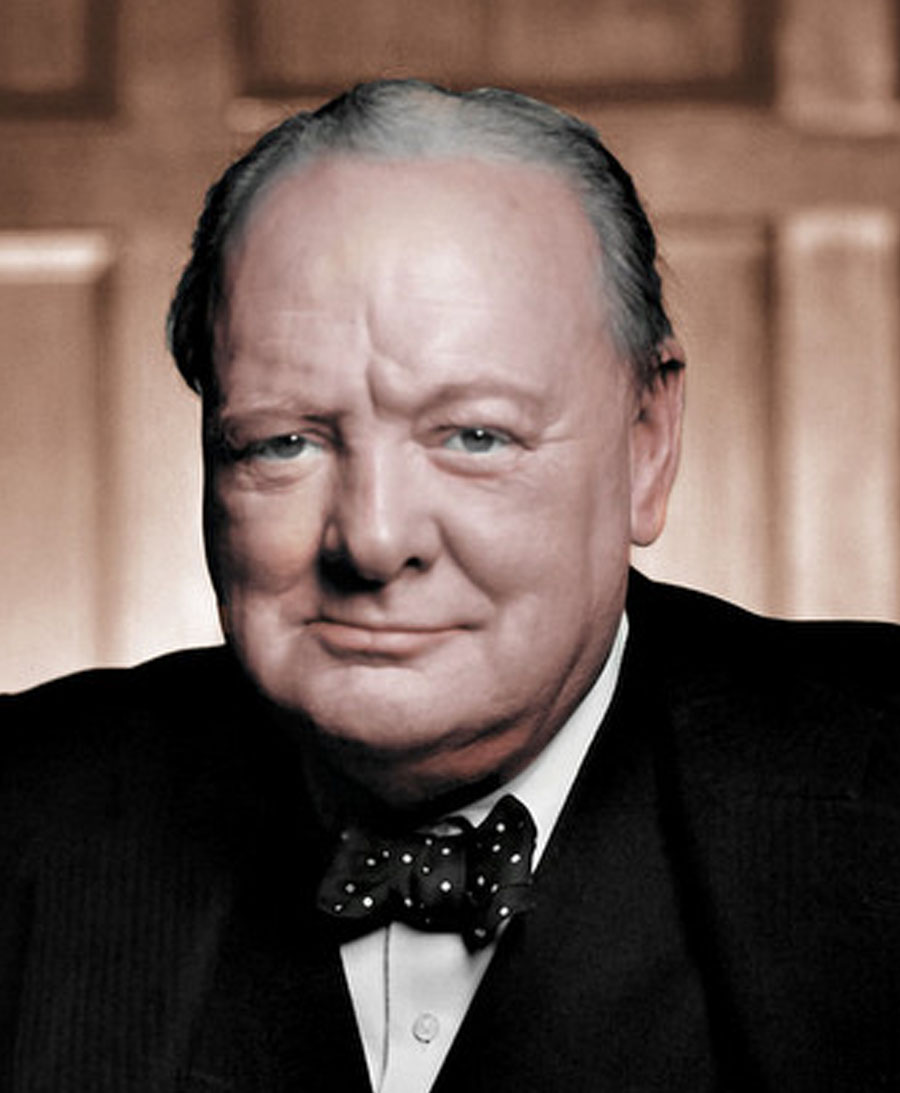

Winston Churchill is the very embodiment of the British war effort in World War II. Appointed Prime Minister upon the resignation of Neville Chamberlain on May 10, 1940, Churchill, a largely unsuccessful Parliamentarian unpopular even within his own party, was suddenly faced with uniting the government, leading Great Britain’s war effort, and building alliances with the United States and the Soviet Union against Germany, Italy, and Japan. As Prime Minister, Churchill employed his masterful rhetorical skills to galvanize British will to wage a long war and maintain the support of his allies.
Churchill’s unsurpassed ability to communicate a vision of victory in the face of overwhelming odds, deftly streamline his cabinet’s wartime organizational structure, select effective subordinates, and maintain strategic partnerships enabled an isolated Great Britain to withstand Germany’s onslaught. He was able to balance vast ideological differences amongst the Allies and manage complex interpersonal relationships of key leaders to defeat the Axis Powers decisively. Battlefield Leadership uses compelling lessons from Winston Churchill’s life and career to explore the importance of effective communication, forging alignment, and the essential need for visionary leadership.
